

What Doors Suit Humid Homes Best?
- findnfound
- Jul 3
- 6 min read
Humidity has a way of exposing weak materials fast. A door that looks fine in the showroom can swell, warp, stick or show early signs of mould once it is installed in a bathroom, kitchen or poorly ventilated service yard. If you are asking what doors suit humid homes, the right answer is not just about looks. It is about choosing a material and door system that can keep its shape, handle daily moisture and still complement the space.
In Singapore-style living, that matters more than most homeowners expect. Bathrooms stay damp for hours, kitchens collect steam, and even bedrooms can feel muggy during wetter months. A good door should not only survive those conditions. It should still look sharp, close properly and make the room feel finished.
What doors suit humid homes in real life?
The best doors for humid homes are usually aluminium, selected metal systems and moisture-resistant engineered options. Solid timber may look warm and premium, but in high-humidity areas it often demands more care and carries more risk. That does not mean wood should never be used. It means the location matters.
For bathrooms, kitchens, yard areas and other moisture-prone spaces, aluminium doors are often the strongest all-round choice. They do not absorb water like natural timber, they are resistant to rust when properly finished, and they hold up well in daily use. They also suit modern interiors, especially if you want clean lines, slim frames and a lighter visual profile.
For drier interior zones, some engineered wooden doors can still work well if they are properly finished and installed. The trade-off is that they generally need more protection from prolonged moisture. If your household uses air-conditioning regularly and the space stays relatively stable, you have more flexibility. If the room gets steam, splashes or poor airflow, practical performance should lead the decision.
Why humidity affects doors so quickly
Humidity is not only about obvious water exposure. Moisture in the air slowly works its way into porous materials. Timber is the classic example. It expands when it absorbs moisture and contracts when conditions dry out. Over time, that movement can cause sticking, misalignment, cracking in the finish or visible warping.
This is why some doors start scraping the floor or no longer sit neatly in the frame. The problem is not always poor workmanship. Sometimes the material is simply not ideal for the environment.
Bathrooms are especially demanding because they combine steam, direct water contact and limited ventilation. Kitchens bring cooking vapour, grease and heat. Service yards often face rain drift and outdoor humidity. In these spaces, moisture resistance is not a bonus feature. It is the baseline.
Aluminium doors are often the safest choice
If your priority is durability with a polished finish, aluminium deserves serious attention. It is one of the most practical answers to what doors suit humid homes because it combines water resistance with design flexibility.
Aluminium does not swell the way timber can. It is also lighter than many people expect, which helps with smoother operation in sliding, folding and swing formats. For homeowners who want a refined, contemporary look, slim-profile aluminium systems can make a space feel more open without sacrificing practicality.
This is especially useful in HDB flats and condominiums where every centimetre counts. A bifold or sliding aluminium door can save space in a bathroom entrance or kitchen zone, while still standing up to daily moisture. In a shower screen or wet-and-dry bathroom partition, aluminium frames also offer a clean, structured finish that suits both minimalist and more decorative interiors.
Another advantage is customisation. Humid homes are rarely served well by one-size-fits-all products. Made-to-measure aluminium systems allow for better fit, smoother installation and a more intentional visual result.
Are wooden doors ever suitable?
Yes, but with conditions. Wooden doors can still be a good fit for bedrooms, study rooms and other lower-moisture areas where you want warmth and texture. They can soften a modern interior and create a more traditional or luxurious feel.
The issue is not that wood is poor quality. The issue is that natural materials react to the environment. In a humid home, that means wood needs proper sealing, careful installation and realistic expectations. If it is used near bathrooms, kitchens or laundry areas, the risk of swelling and finish damage increases.
Engineered wood usually performs better than untreated solid timber in variable conditions because it is built for more stability. Even so, it is still not the first material most professionals would recommend for the wettest parts of the home.
So if you love the appearance of wood, the better approach is often to use it selectively. Put it where it can be appreciated without forcing it to fight constant moisture.
The best door type depends on the room
Material is only part of the decision. Door format matters as well.
For bathrooms, aluminium swing doors and bifold doors are popular because they manage humidity well and can work in tighter layouts. If floor area is limited, a bifold design can give you easier access without the full clearance of a standard swing door. If you want a neater, more premium visual line, a slim aluminium swing door often feels more architectural.
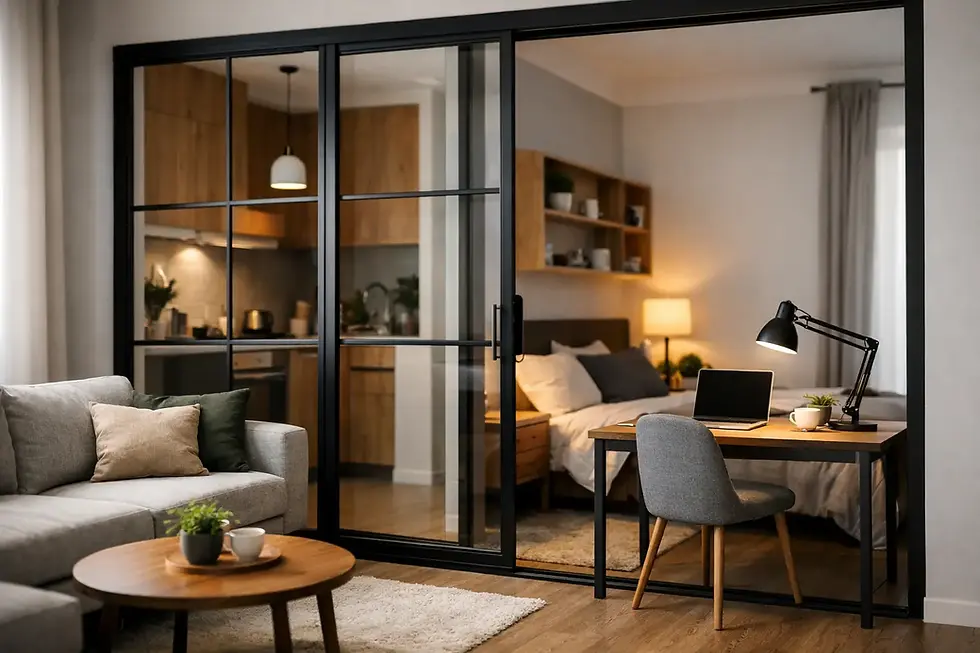
For kitchens, sliding doors and glass-panel aluminium systems are strong options. They help contain cooking smells and steam while keeping the space visually connected. This works particularly well in open-plan flats where homeowners want some separation without making the kitchen feel shut off.
For shower areas, dedicated shower screens are usually more suitable than trying to make a general-purpose door do everything. Properly designed wet-area systems improve water control, reduce cleaning headaches and create a more finished look.
For wardrobes in humid rooms, aluminium-framed sliding doors can also outperform heavier wood-based options over time. They stay stable, operate smoothly and suit contemporary bedroom styling.
What to look for beyond the material
A door can be made from the right material and still disappoint if the details are wrong. In humid homes, fabrication quality and installation matter just as much as the frame itself.
Look at the finish. A poor coating will age quickly in moisture-prone environments. Look at the hardware too. Hinges, rollers, handles and tracks should be chosen with durability in mind. If the fittings corrode or loosen early, the whole system will feel tired long before it should.
Good sealing also makes a difference. In bathrooms and kitchens, proper edge treatment and smart installation help reduce moisture creep and improve performance. This is where a made-to-measure approach is worth more than a cheaper off-the-shelf option. A well-fitted door closes better, looks cleaner and is less likely to develop avoidable issues.
Design should not be ignored either. A humid-home door still needs to suit the interior. The strongest choices today are not purely utilitarian. Aluminium, in particular, has moved well beyond the basic industrial look many homeowners still imagine. With the right profile, panel combination and finish, it can look sleek, refined and entirely at home in a design-conscious renovation.
What doors suit humid homes if you want style too?
This is where many buyers hesitate. They assume the most moisture-resistant option will look plain. That is no longer true.
If you want doors that are practical and visually elevated, aluminium systems strike one of the best balances on the market. They can be configured as elegant sliding doors, sharp swing doors, neat bifold doors and sophisticated shower screens. The result is a home that feels intentional rather than compromised.
For homeowners planning a renovation, this matters. The door is not a background item. It affects sightlines, natural light, movement and the overall mood of the room. A well-chosen system can make a compact bathroom feel tidier, a kitchen feel brighter and a wardrobe wall feel more integrated.
That is why many modern homes now prioritise materials that can perform quietly in the background while still lifting the look of the space. Ministry of Door has built much of its offering around exactly that balance - doors that handle real household conditions while contributing to a more polished interior.
If you are choosing for a humid home, start with performance and finish with design. Not the other way round. The most satisfying results usually come from doors that resist moisture, fit the space properly and still look like they belong in the home you are building. When the material, layout and installation are right, you stop thinking about maintenance problems and start enjoying the room as it should feel every day.


Comments