

Water Resistant Bathroom Doors for Singapore Homes
- findnfound
- Jul 14
- 5 min read
A bathroom door may occupy only a small part of your renovation budget, but it faces some of the hardest daily conditions in the home. Steam after a shower, wet hands on the handle, splashes from a basin and Singapore’s humid climate can quickly expose weaknesses in poorly chosen doors. Water resistant bathroom doors are designed to keep their shape, finish and function while giving the room a clean, considered look.
For HDB flats, condominiums and landed homes, the right choice is not simply about finding a door labelled “waterproof”. The door type, frame, hardware, ventilation and installation details all affect how it performs over time. A well-planned aluminium system can make a compact bathroom feel brighter and more refined, while reducing the maintenance concerns that come with conventional timber doors.
Why bathroom doors fail in humid homes
Most bathroom door problems begin at the bottom edge. Water left on the floor can be drawn into unprotected timber or fibreboard, causing the surface to swell, peel or lose its alignment. Repeated steam can also affect laminated finishes and adhesives, while a poorly ventilated bathroom holds moisture around the frame and hinges for longer than it should.
A door can look perfectly acceptable when it is first installed, then start catching on the frame a year later. That is why appearance alone is not a reliable guide. The material must suit the room’s moisture level, and the installation must allow the door to open, close and drain sensibly in day-to-day use.
There is also a difference between water resistant and fully waterproof. A water-resistant door is built to tolerate moisture, splashes and humid air. It should still not sit in standing water or be treated as though every part of the opening is immune to poor bathroom maintenance. Good material selection gives you protection; good detailing makes that protection last.
Choosing water resistant bathroom doors by material
Aluminium: a polished choice for wet areas
Aluminium is a natural fit for bathroom entrances and partitions because it does not absorb water in the way timber-based materials can. It is lightweight, stable and available in finishes that suit contemporary interiors, from soft neutral tones to darker frames that create definition around glass panels.
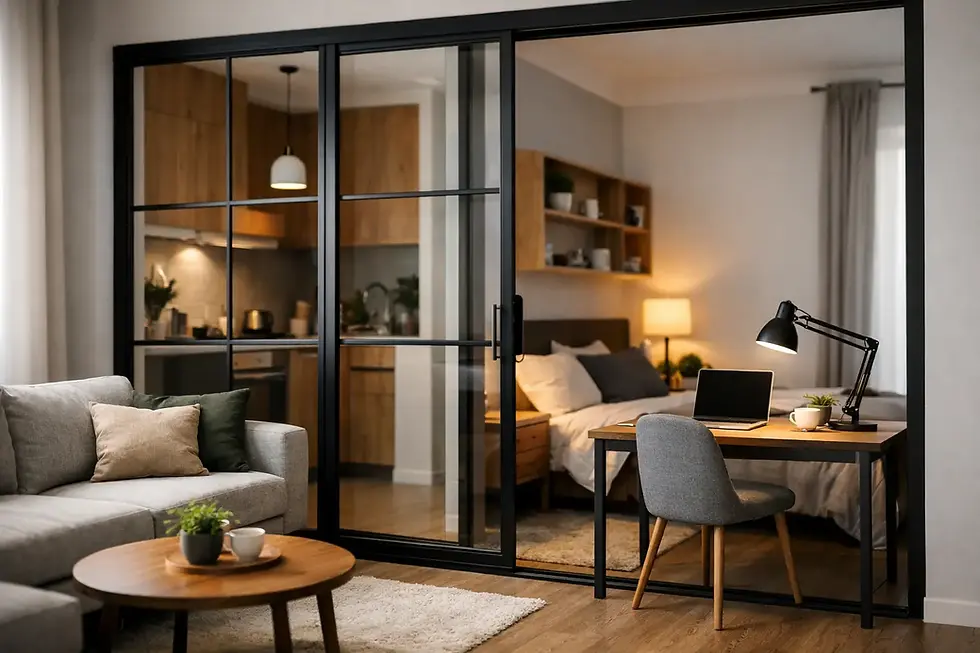
For homeowners who want a more open, design-led bathroom entrance, an aluminium swing, bifold or sliding system can be made to measure for the available opening. Slim profiles are especially useful where visual lightness matters. Frosted, fluted or obscured glass can bring in light while preserving privacy, making a small corridor or common bathroom feel less enclosed.
The trade-off is that aluminium systems rely on accurate fabrication and quality fittings. A poorly measured frame, unsuitable hinge or weak sliding hardware can undermine an otherwise excellent material. Professional installation is part of the solution, not an optional extra.
PVC and composite options: practical, but check the finish
PVC doors are commonly selected for their water resistance and accessible price point. They can be a sensible choice for service yards, rental properties or bathrooms where a straightforward, low-maintenance door is the priority. However, their visual finish and long-term rigidity vary considerably between products.
Composite and WPC-style doors may offer a more substantial feel than basic PVC, but the core is only one part of the equation. Ask how the edges are sealed, what the surface layer is made from and whether the frame and architraves are also suitable for a damp environment. A moisture-resistant leaf paired with a vulnerable frame is not a complete bathroom solution.
Timber-look doors: beautiful only with the right protection
A warm timber look can work beautifully in a carefully designed home, particularly when it connects the bathroom with bedroom joinery or a hotel-inspired interior. Yet natural timber and many engineered wood products need more care near regular water exposure.
If you prefer this look, keep it for a well-ventilated bathroom where the shower area is fully separated, and ensure all exposed edges are properly finished. For bathrooms used by children, guests or a busy family, an aluminium or purpose-made moisture-resistant alternative is often the lower-risk choice.
Select the opening style around your layout
The best bathroom door is one that works with the way people move through the home. In a compact HDB layout, a door that swings into a narrow passage can create daily inconvenience. A bifold door can reduce the clearance required, while a sliding door can free up valuable floor area where there is sufficient wall space beside the opening.
Swing doors remain a classic option when the layout allows for them. They offer a familiar, solid feel and can be paired with discreet aluminium frames or privacy glass for a more elevated finish. For a bathroom entrance that opens directly from a bedroom, consider whether the door swing interrupts wardrobes, bedside access or circulation around the room.
Where a shower zone needs to be separated from the rest of the bathroom, a properly specified shower screen is usually more appropriate than relying on the main bathroom door to manage direct spray. This distinction helps protect both your door and the wider bathroom finishes.
Details that make a water-resistant door perform better
The everyday performance of water resistant bathroom doors comes down to details that are easy to overlook during a renovation discussion. The following checks are worth raising before fabrication begins:
Confirm that the door, frame and bottom edge are all suited to humid and wet conditions.
Choose corrosion-resistant hinges, handles, rollers and screws, especially near shower areas.
Allow an appropriate bottom clearance for airflow without creating an excessive gap that affects privacy.
Consider frosted or textured glass where natural light is useful but clear visibility is not.
Make sure the finished floor level, tiles and any threshold are measured before the final door sizing is confirmed.
A door should not scrape against new tiles, trap water at its base or leave a gap so large that it feels unfinished. These points sound simple, but they are exactly where site measurement and installation experience matter.
Ventilation and cleaning still matter
Even the most suitable door material benefits from a dry, ventilated bathroom. Use an exhaust fan where possible, open windows after showering and avoid leaving wet bath mats pressed against the base of the door. These habits reduce condensation on frames, fittings and glass, while helping the whole bathroom remain fresher.
Cleaning should be gentle and consistent. Wipe aluminium frames and glass with a soft cloth and mild cleaner, then dry the edges rather than allowing water marks and soap residue to build up. Avoid harsh abrasive pads that can dull coated finishes or scratch glass. Check hinges, handles and rollers periodically, particularly in bathrooms used frequently by a larger household.
If a door starts to drag, loosen, rattle or show discolouration around a fitting, address it early. Minor adjustment is generally far simpler than waiting for misalignment to place strain on the frame or hardware.
Design without sacrificing privacy
Bathroom doors do not need to look purely functional. A slim aluminium frame in black, champagne or a softer neutral finish can complement modern tiles, stone-look surfaces and warm wood-grain cabinetry. The right glass choice can also change the feel of a tight space: fluted glass offers texture, frosted glass softens silhouettes, and coloured or tinted glass can create a more distinctive interior statement.
Privacy remains the deciding factor. Consider sightlines from the living area, bedroom and hallway before choosing the glass opacity. For a common bathroom, a more obscured panel is often the practical choice. For an en-suite with a separate shower and dressing area, you may have more freedom to introduce light and texture.
Custom sizing is particularly valuable in older flats and renovated homes, where walls and openings are not always perfectly standard. Ministry of Door can help homeowners pair made-to-measure aluminium door systems with practical site advice, so the final result suits both the opening and the way the household uses it.
A bathroom door is used quietly, repeatedly and often with wet hands. Choose one that handles those everyday moments with confidence, fits the space precisely and adds a finish you will still be pleased to see after the renovation dust has settled.


Comments