
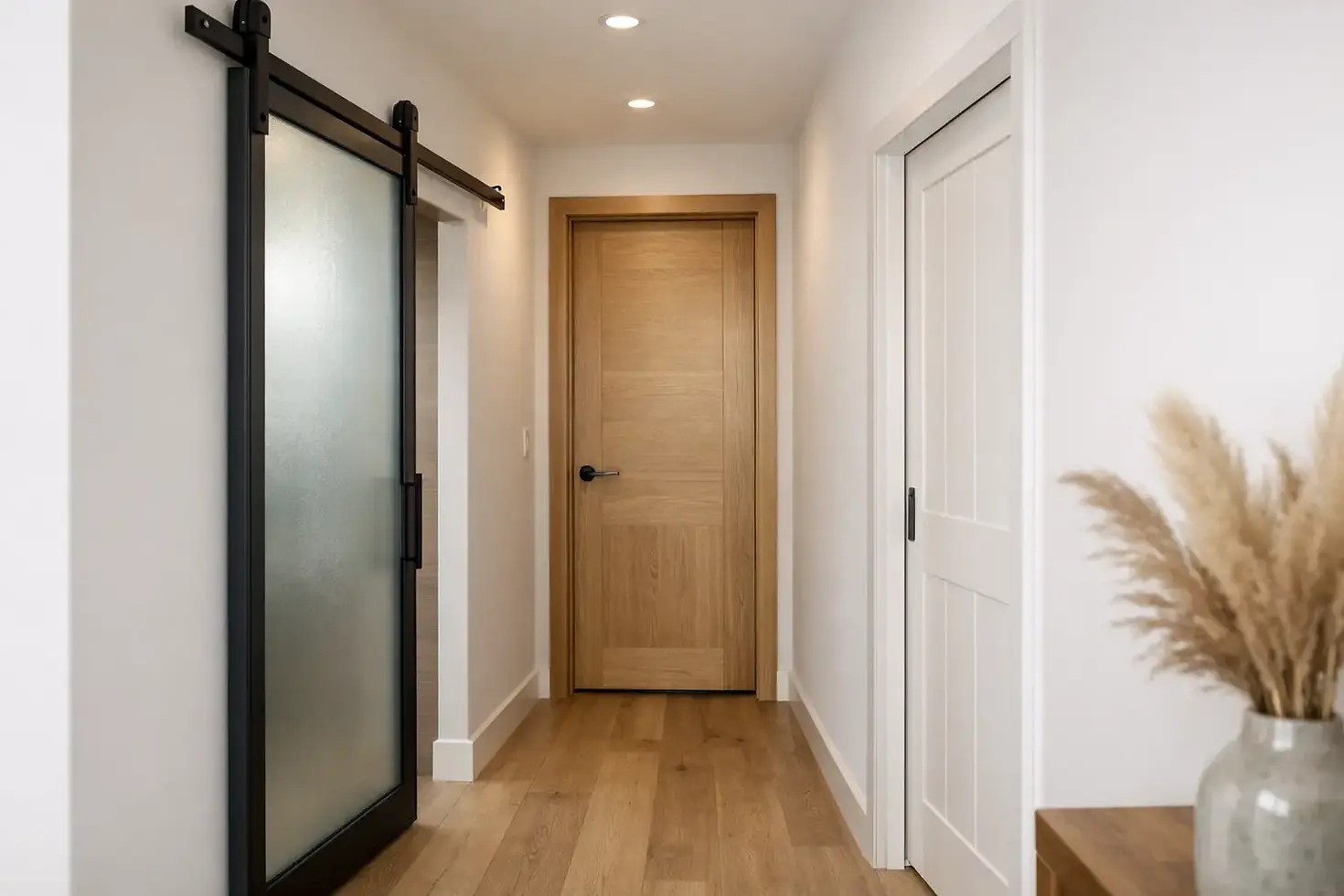
Best Doors for Narrow Hallways at Home
A narrow hallway can make a home feel tighter than it really is. The wrong door swings too far, clips a wall, blocks movement, and turns an already compact passage into a daily frustration. Choosing the best doors for narrow hallways is not just about saving space - it is about making the home easier to move through, brighter to live in, and better resolved visually.
In Singapore homes especially, where HDB flats and condominiums often work with compact layouts, every door has to earn its footprint. A bulky traditional leaf may suit a large entrance, but in a slim corridor leading to a kitchen, bathroom, service yard or utility area, space planning matters just as much as appearance. The good news is that there is no single right answer. The best option depends on clearance, privacy needs, moisture exposure, and the look you want to achieve.
What makes the best doors for narrow hallways?
The first thing to consider is swing clearance. If a door opens into the hallway, it immediately steals usable width. If it opens into a room, it may still interfere with furniture placement or circulation inside. That is why narrow hallways usually benefit from door systems that slide, fold, or minimise the arc of movement.
The second factor is visual weight. Even when a door technically fits, a thick frame or heavy panel can make a corridor feel boxed in. Slimmer aluminium-framed systems often work well because they keep the profile clean and modern while allowing glass, acrylic or panel combinations that feel lighter in compact spaces.
Then there is durability. In homes, hallways often connect high-use and high-moisture zones such as kitchens, bathrooms and service areas. A stylish door should still cope well with humidity, regular cleaning and everyday wear. That is where material choice becomes practical, not purely aesthetic.
Sliding doors for narrow hallways
If your main problem is lack of swing space, sliding doors are usually the strongest contender. Because the panel glides along a track rather than opening outward, the hallway stays clear. This makes sliding systems especially useful for entrances to kitchens, study corners, wardrobes, utility zones and bathroom dry areas.
A slim profile sliding door can also improve the visual flow of a corridor. Glass panels allow light to travel between rooms, which helps a narrow passage feel less enclosed. Frosted or fluted finishes give more privacy without making the space feel shut off. For homeowners who want a contemporary look, this option balances space efficiency with design impact very well.
There are trade-offs. A sliding door needs wall or panel allowance for the leaf to stack or travel. It also does not seal as tightly as some hinged options, so if sound control is the main concern, this may not be your first choice. Still, for many compact homes, the gain in movement and openness makes sliding doors one of the best doors for narrow hallways.
Bifold and folding doors when space is tight
Bifold and folding doors are practical when a sliding path is not available. Instead of one full panel swinging wide, the leaves fold into sections, reducing the clearance needed. This makes them useful for pantry entrances, laundry areas, storerooms and compact room openings where every centimetre matters.
Their biggest strength is flexibility. You can open them partially for quick access or fully to widen the opening. In a hallway, that can make the route feel less interrupted compared with a conventional swing door. They also suit spaces where a full-width opening is useful, such as connecting a kitchen or utility area to the corridor.
The main thing to watch is stacking space. Even folded, the panels sit at one side of the opening, so the design has to be proportioned properly. Cheaper systems can also feel flimsy over time, which is why fabrication quality and installation matter. A well-made aluminium folding system tends to perform better in humid conditions and gives a neater finish.
Swing doors can still work - if planned properly
A standard swing door is not automatically the wrong choice. In some hallways, it remains the most sensible option, especially where privacy, acoustic separation or a more traditional room entrance is needed. The key is to control the direction of swing and the panel size.
For example, an inward-opening door may keep the hallway clear if the room layout can accommodate it. A narrower leaf can also solve awkward clearance issues without compromising usability too much. In some cases, a single slim swing door with an aluminium frame feels far less bulky than a heavy timber design.
This is where made-to-measure planning helps. Off-the-shelf dimensions do not always suit older flats or renovation layouts. A customised swing door can be adjusted to the actual site condition so it works with the corridor rather than against it.
Pocket-style thinking without the complexity
Many homeowners ask about pocket doors because they disappear into the wall and keep circulation fully open. In theory, they are excellent for narrow hallways. In practice, they often require more extensive structural planning, especially in renovation projects where hacking, wall depth and services can complicate the installation.
That is why surface-mounted sliding systems are often the more realistic alternative. You get much of the same space-saving benefit, but with simpler installation and easier maintenance access. For most residential projects, this is the more practical route unless the renovation is already being planned from scratch.
The best material for compact corridor doors
Material changes how a door looks, feels and lasts. In narrow hallways, aluminium stands out because it supports slimmer frames, cleaner lines and better moisture resistance than many conventional options. It works particularly well in homes where the hallway links to wet or warm areas, such as bathrooms, kitchens and service yards.
It also suits a more design-led finish. Powder-coated frames in black, white, grey or custom tones can either blend quietly into the space or create a sharp architectural edge. Combined with clear, tinted, frosted or textured inserts, the result feels more tailored than generic.
Wooden doors still have their place, especially if you want a warmer, classic appearance. But in tight corridors, they can read heavier visually, and in more humid zones they may not be the most practical long-term choice. If the goal is a balance of style, durability and space efficiency, aluminium often gives more flexibility.
Design details that make a hallway feel wider
The best doors for narrow hallways do more than fit. They help the corridor feel more comfortable. Light transmission is one of the most effective tools. A fully solid door can make a passage look closed off, while a glazed or partially glazed panel softens the transition between spaces.
Frame thickness matters too. Slim profiles create a cleaner sightline and avoid the chunky look that can overwhelm a small corridor. Even handle choice plays a role. Low-profile pulls and recessed hardware reduce visual clutter and prevent accidental knocks in high-traffic passages.
Colour should be considered with the surrounding walls and flooring. Lighter tones usually help compact spaces feel more open, but darker frames can look refined and intentional when the overall interior style supports them. It depends on whether you want the door to disappear or become part of the design statement.
Choosing by room type
Not every hallway door should solve the same problem. A bathroom entrance may need privacy and water resistance first. A kitchen opening may benefit more from light flow and partial separation. A store room may simply need compact access with no wasted swing.
That is why product selection should start with use, not just appearance. In many homes, the strongest results come from mixing door types across the layout rather than forcing one system everywhere. A sliding door for the kitchen, a folding door for the service area, and a tailored swing door for a bedroom can create a more coherent and liveable plan.
For homeowners who want both visual polish and practical performance, working with a supplier that fabricates to size and handles installation can make the difference between a door that merely fits and one that genuinely transforms the space. Ministry of Door focuses on exactly that balance - beautiful proportions, reliable materials and solutions shaped around real homes.
Before choosing, stand in the hallway and look at how people actually move through it. Where do shoulders turn, bags catch, and light stop? The right door should solve those small daily interruptions so the whole home feels calmer, cleaner and easier to enjoy.


Comments