
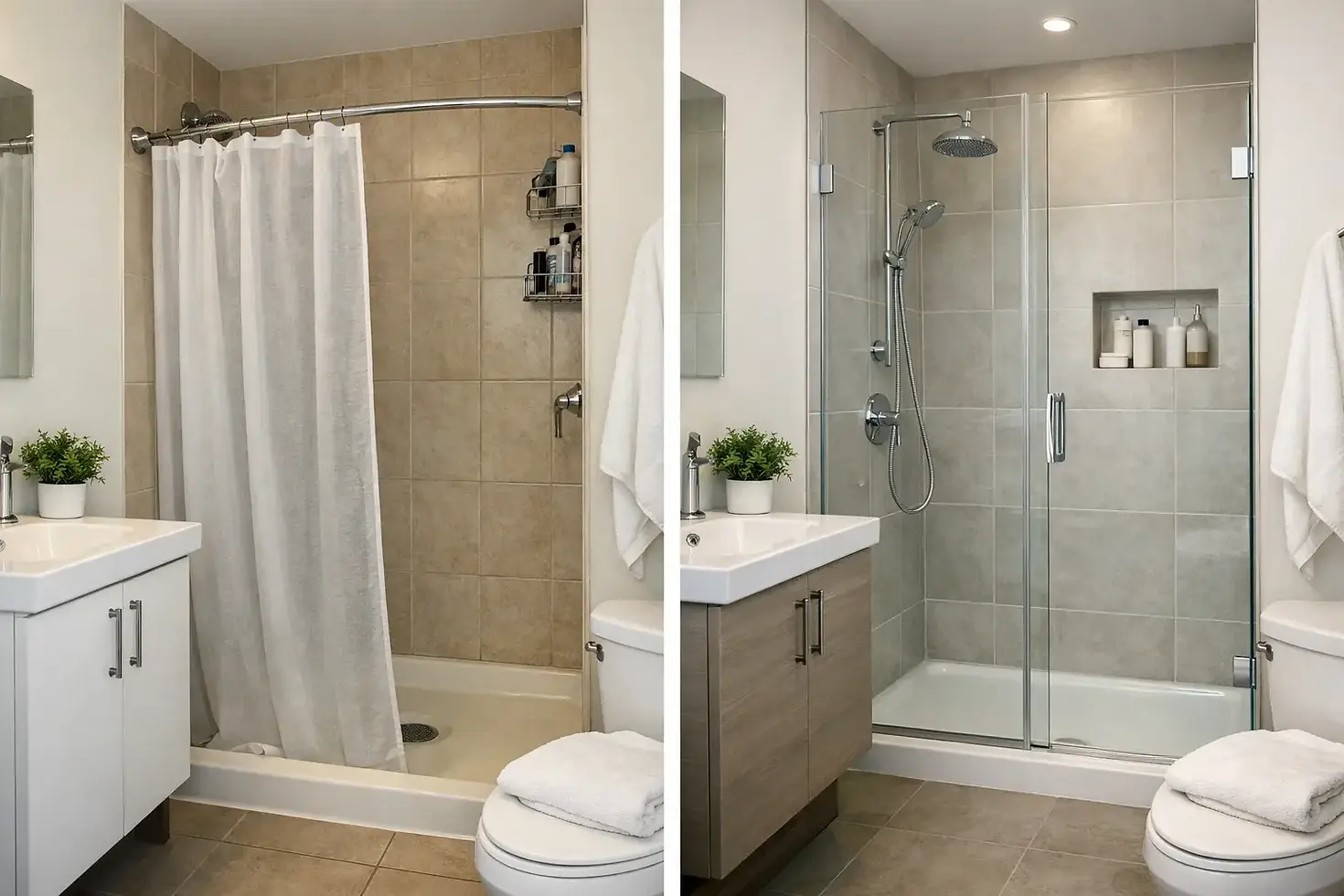
Small Bathroom Shower Screen Makeover Example
A cramped bathroom usually feels worse at the shower area first. The wrong screen can make the room look boxed in, catch every water mark, and turn an already tight layout into a daily annoyance. That is why a small bathroom shower screen makeover example is so useful - it shows how one well-chosen feature can change both the look and function of the whole space.
In compact homes, especially HDB flats and condominiums, every line matters. A shower screen is not just there to keep water in. It affects visual openness, cleaning effort, movement around the vanity and WC, and how polished the bathroom feels once everything is installed. When the proportions are right, the room looks calmer, brighter and better organised without needing a full rebuild.
A realistic small bathroom shower screen makeover example
Picture a common compact bathroom layout - roughly rectangular, with the shower at one end, a wall-hung basin on one side, and the WC placed close enough that every extra centimetre matters. The original setup uses a bulky framed partition with dated trim and cloudy acrylic. It does the basic job, but the room feels darker than it should, and the frame visually chops the bathroom into smaller pieces.
The makeover replaces that partition with a made-to-measure slim aluminium shower screen in clear tempered glass. The aluminium frame is kept fine and neat rather than heavy. Instead of drawing attention to itself, it sharpens the shower zone while allowing the rest of the bathroom to remain visually connected.
That single change has a surprisingly large effect. Light now moves across the entire room, the floor area appears longer, and the bathroom feels cleaner even before any styling is added. If the finish is chosen in matte black, champagne, or another refined tone, the screen can also become a proper design element rather than a purely functional barrier.
Why the shower screen changes the whole bathroom
In small bathrooms, visual weight matters as much as physical size. A thick frame, frosted panel or awkward swing path can make the room feel more crowded, even if the footprint stays the same. By contrast, a well-designed shower screen creates separation without making the space feel shut off.
This is where many homeowners get caught. They focus on tiles, mirrors and fittings, but the screen is often the piece that determines whether the layout feels airy or awkward. If it is proportioned correctly, the bathroom looks more expensive and more intentional. If it is not, even premium finishes can feel compromised.
There is also the practical side. In Singapore’s humid conditions, bathroom materials need to handle moisture well and stay easy to maintain. Aluminium-framed shower screens make sense because they offer durability, water resistance and a clean profile that suits contemporary interiors. A good installation also reduces nuisance issues such as poor alignment, water leakage and doors that never seem to close properly.
Choosing the right format for a compact layout
Not every small bathroom should use the same type of shower screen. The best option depends on clearance, wall position, and how people move through the room every day.
Sliding shower screens
For tighter layouts, sliding screens are often the most space-efficient choice. Because the panel does not swing outward, it keeps walkways clear and avoids clashes with the basin cabinet or WC. This works especially well when the shower zone sits close to the entrance or when the room is narrow.
The trade-off is that sliding systems need proper fabrication and alignment. Cheap versions can feel flimsy over time, so the quality of the track and frame matters.
Swing shower screens
A swing screen gives a simple, elegant look and can be very easy to clean. In a slightly larger bathroom, it creates a sleek hotel-style effect. But in a truly compact space, the door swing must be checked carefully. If it interrupts movement or knocks against fittings, the style is not worth the inconvenience.
Fixed panels
A fixed panel is ideal for homeowners who want the lightest visual touch. It suits a modern, minimal bathroom and can make a small room feel open. The trade-off is splash control. Depending on shower placement and water pressure, a fixed panel may allow more water to escape onto the dry area.
Details that make the makeover feel premium
A good makeover is rarely about one item alone. The shower screen works best when it is chosen as part of the bathroom’s wider visual language.
Frame finish is one of the first decisions. Black aluminium adds definition and a contemporary edge, especially against light tiles. Silver or brushed finishes feel cleaner and more understated. Warmer tones can soften the overall look if the bathroom uses beige, stone or wood-effect surfaces.
Glass choice also matters. Clear glass is usually best in a small bathroom because it keeps the room feeling open. Frosted or patterned glass gives more privacy, but it can make the space feel slightly more enclosed. It depends on whether the bathroom is a shared family space or an en suite where visual openness is the bigger priority.
Then there is the matter of proportion. A shower screen that stops awkwardly below ceiling height can look unfinished, while one designed neatly to suit the existing wall lines looks deliberate. Made-to-measure fabrication tends to produce the best result because compact bathrooms rarely forgive generic sizing.
What homeowners often miss during planning
Many bathroom upgrades start with a visual idea and only later deal with technical constraints. That is where delays and regrets usually begin.
The first issue is floor gradient. A stylish shower screen will not solve poor drainage. If the water does not flow correctly towards the trap, the shower area will always feel messy. The screen should support the bathroom layout, not compensate for faults elsewhere.
The second is handle and access placement. A lovely screen can still be irritating if the handle sits too close to another fixture or if the opening angle feels cramped. Daily comfort matters more than showroom appearance.
The third is maintenance. Some homeowners choose highly decorative profiles, extra joints or difficult corners, then realise those details collect grime. In a compact bathroom, cleaner lines usually perform better over time.
How a small bathroom shower screen makeover example applies to real homes
This kind of makeover is especially relevant for homeowners who do not want a complete bathroom overhaul. If your tiles are still in good condition and your fittings are serviceable, replacing the shower screen can deliver a strong visual reset at a more manageable cost.
It is also a smart upgrade before renting out or selling a property. Bathrooms heavily influence how well a home is perceived, and a modern screen helps the whole room feel newer. Even when the rest of the fittings are simple, a refined aluminium-framed shower screen makes the space look maintained and thoughtfully updated.
For family homes, the right screen helps with housekeeping too. Water containment improves, surfaces stay drier, and the bathroom often feels easier to keep neat. That practical difference is part of the makeover, not a side benefit.
When customisation is worth it
Standard sizes work in some bathrooms, but compact layouts often have quirks - off-centre pipes, uneven walls, low beams, narrow clearances or unusual recesses. That is where customisation earns its value. A tailored screen fits the room properly, aligns with the architecture, and avoids the patched-together look that sometimes comes from forcing a standard solution into a non-standard space.
For homeowners who want a polished result, this is where an experienced supplier and installer make a real difference. Ministry of Door, for example, focuses on aluminium systems that are designed to improve both appearance and everyday use, which is exactly what a small bathroom needs when space is limited and every finish is more visible.
The best makeover mindset
The strongest bathroom upgrades are not always the biggest. In small spaces, one precise improvement can outperform a long list of cosmetic changes. A shower screen sits right at that sweet spot - functional, design-led and immediately noticeable.
If you are planning your own upgrade, think beyond whether the screen simply fits. Ask whether it lightens the room, suits the layout, and gives the bathroom a more finished mood. In a compact home, that shift is often what makes the space feel transformed rather than merely updated.
A well-chosen shower screen does not just separate the wet area. It gives the whole bathroom better structure, better balance and a better daily experience - and that is usually the difference people notice first.


Comments