
Pocket Versus Sliding Doors: Which Suits Your Home?
- findnfound
- 5 days ago
- 6 min read
A doorway can take up more useful room than most homeowners expect. In a compact HDB flat, a hinged door’s swing path may interfere with kitchen cabinets, wardrobes or the route between living areas. That is why the pocket versus sliding door decision deserves more than a quick choice based on appearance. Both systems save space and can create a cleaner, more open interior, but they work very differently once installation, wall conditions and daily use are considered.
For many Singapore homes, the best answer comes down to one question: do you want the door to disappear completely, or would you prefer a visible design feature that is easier to install and maintain?
Pocket versus sliding doors: the key difference
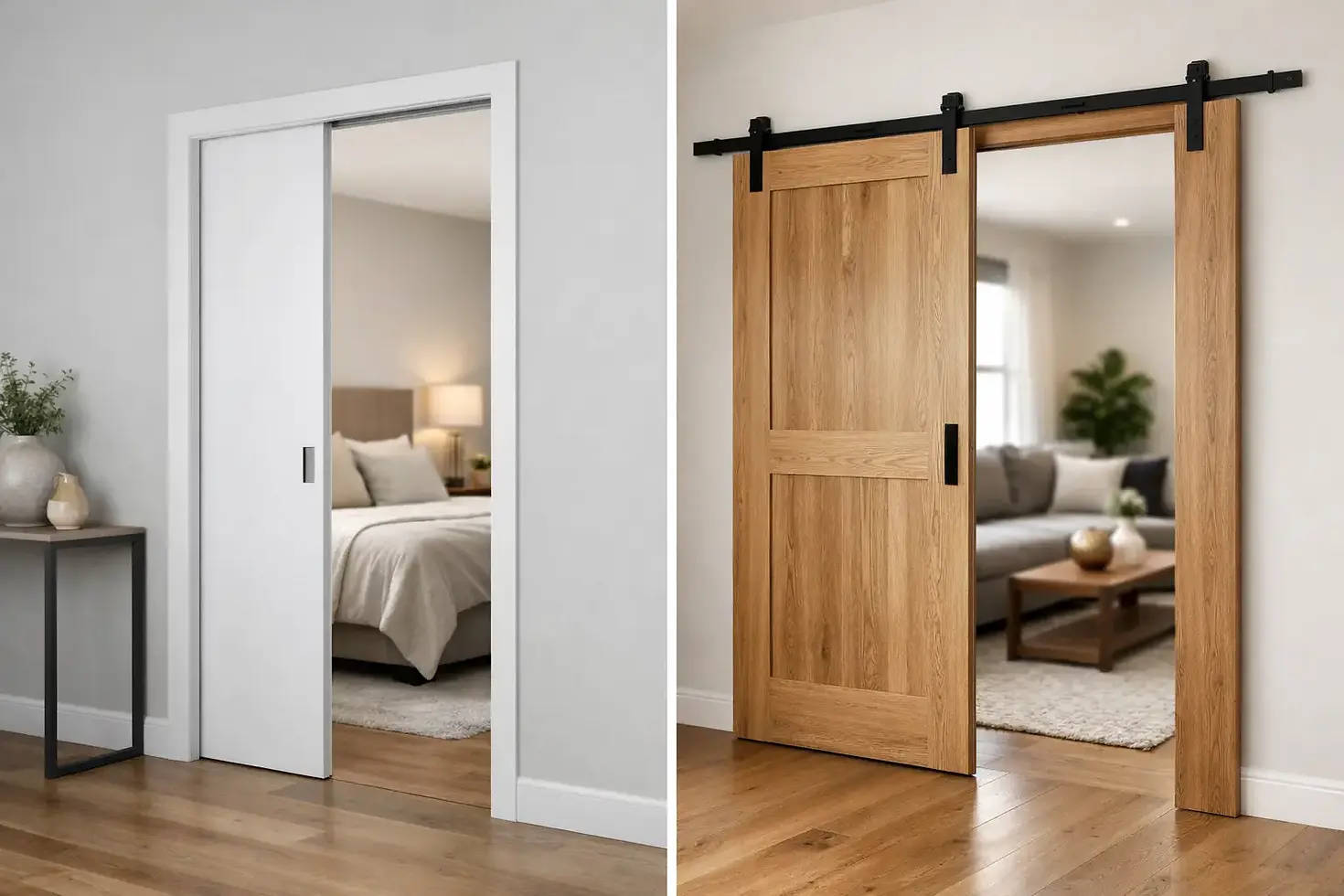
A pocket door slides into a concealed cavity within the wall. When fully open, the door leaf is hidden, leaving the doorway clear. It is an excellent option where every centimetre matters, such as an ensuite bathroom, a compact study, a kitchen entrance or a narrow corridor.
A sliding door usually travels along a track beside the wall, or within a framed partition. The door remains visible when open, but it does not need a swing clearance area. Slim-profile aluminium sliding doors are particularly popular for separating kitchens from living spaces, creating flexible rooms, enclosing service areas or opening up wardrobes without making the interior feel boxed in.
The difference sounds simple, yet it affects your renovation planning from the start. A pocket system relies on the condition and construction of the wall. A surface-mounted sliding system relies on having enough clear wall space for the panel to park when open.
When a pocket door is the smarter space-saving choice
Pocket doors are chosen for their disappearing act. With no door leaf sitting against the wall, furniture can be placed closer to the opening and circulation feels less restricted. This can be valuable in compact bedrooms or bathrooms where a conventional swing door makes the layout awkward.
They also create a refined, uncluttered finish. With the track and pocket concealed, the doorway can look almost frameless when open. For homeowners aiming for a calm, minimalist interior, this is a strong visual advantage. It is particularly effective when the door colour and wall finish are coordinated, allowing the room to read as one continuous space.
However, a pocket door is rarely a last-minute add-on. The wall must accommodate the pocket frame and the door leaf. Structural walls, walls containing plumbing, electrical wiring or switches, and areas with hidden services may not be suitable without careful assessment. In HDB flats and condominiums, renovation requirements and building management rules should also be checked before any alteration to a wall or partition is planned.
The hardware is another consideration. Because much of the mechanism sits inside the wall, future servicing can be more involved than with an exposed track. Good-quality rollers, a properly aligned frame and professional installation are essential. A poorly installed pocket door may rattle, drag or become difficult to adjust after the wall is closed up.
Pocket doors are best treated as an integrated renovation feature. If you are already rebuilding partitions or undertaking a major layout change, they can be a beautiful use of space. If the walls are staying untouched, a sliding door may offer greater value with fewer site complications.
Why sliding doors suit more renovation layouts
A sliding door delivers much of the space-saving benefit without requiring a cavity inside the wall. It is generally more adaptable for completed homes, where hacking and rebuilding are not part of the renovation scope. The track can be installed at the opening, while the panel glides along an available section of wall or a purpose-built partition.
This makes sliding doors a practical choice for kitchen entrances, bedrooms, study rooms and wardrobes. In a family home, they can separate noisy activity from quieter areas without sacrificing floor space to a swinging door. In a commercial setting, they can divide meeting rooms, consultation areas or back-of-house zones in a clean, efficient way.
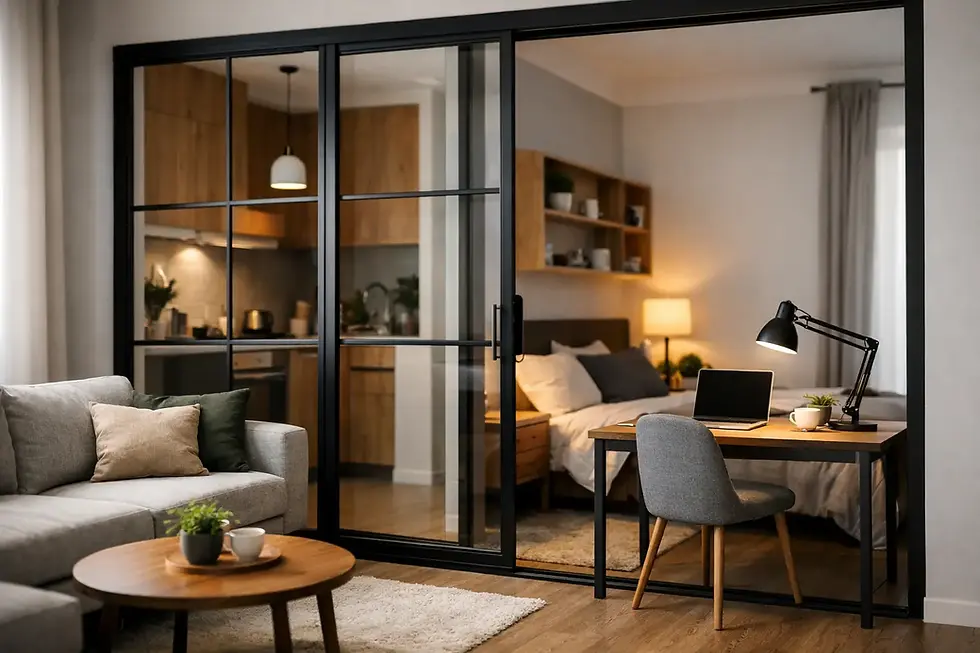
The visible panel is not a drawback when it is well designed. Aluminium slim-profile frames, clear or fluted glass, tinted panels and carefully selected finishes can turn a sliding door into a focal point. Instead of hiding the door, you can use it to introduce texture, definition and light. A black slim frame can give a contemporary edge to a neutral interior, while a softer champagne or wood-look finish can complement a warmer home scheme.
Sliding systems also provide straightforward access to the track and rollers. Regular cleaning is easier, and adjustments can often be made without opening up a wall. This matters in humid environments, where dust, cooking residue and moisture can build up over time. Aluminium is a sensible material for these conditions because it is durable, water-resistant and less prone to warping than many timber alternatives.
Privacy, sound and everyday use
Neither a pocket door nor a standard sliding door will automatically provide the same acoustic performance as a solid, well-sealed swing door. Sliding systems need clearance to move, and those gaps can allow some sound, light and smells through. This is worth considering for bedrooms, home offices and kitchens.
For a kitchen opening, glass sliding doors can help contain cooking fumes while preserving daylight and sightlines. Choose the panel type carefully. Clear glass keeps spaces visually connected, while fluted, frosted or tinted glass gives more privacy and softens the view into the room. For bathrooms or dressing areas, privacy glass and a secure lock are usually more appropriate than a fully transparent panel.
Pocket doors can feel slightly more private when closed if the system is properly fitted, but the final result still depends on the door material, the frame details and the gaps around the panel. If sound control is a non-negotiable requirement, discuss this early rather than assuming every sliding solution will perform in the same way.
Daily habits matter too. A door used repeatedly by children, elderly family members or staff should glide smoothly with minimal effort. Soft-close mechanisms can prevent slamming and reduce wear, while quality handles make a noticeable difference to comfort. For pocket doors, consider how the handle will allow the panel to be pulled fully out of the wall. Small details like an edge pull or recessed finger pull make the system far easier to use.
Design considerations for HDBs, condos and landed homes
In an HDB flat, sliding doors are often used to make a kitchen or study feel more flexible. They offer separation when needed and openness when not. A slim aluminium and glass system can maintain visual depth, which is especially useful where natural light needs to travel through the home.
Condominium owners may favour pocket doors for premium bathrooms, walk-in wardrobes or compact utility areas where a hidden door supports a polished, hotel-inspired look. Yet a surface sliding door can be the more practical choice if the existing wall cannot be altered or the renovation schedule needs to remain lean.
Landed homes offer more freedom in planning, but the same principles apply. Larger openings may call for wider sliding panels, fixed glass side panels or coordinated systems that connect living areas to kitchens, patios or dressing spaces. A made-to-measure solution is important here. An oversized opening should not be forced into a standard door size, as proportions, track capacity and panel weight all affect performance.
Cost and installation: look beyond the door panel
A pocket door may appear simple once completed, but the overall installation can involve more work. The existing wall may need to be opened, a pocket frame installed, services rerouted, and the wall reinstated and finished. The cost should account for these site works, not only the door itself.
A sliding door can often be installed with less disruption, especially where there is suitable wall space. Its final price still depends on the opening size, frame profile, glass selection, hardware, track length and whether a new partition is required. Premium slim frames and customised finishes can raise the investment, but they also elevate the visual impact of the room.
The better value is not always the lowest initial quotation. A well-measured, properly fabricated door should move quietly, sit neatly within the opening and continue to perform after daily use. Ministry of Door approaches this as a complete door solution, matching made-to-measure aluminium systems with practical site assessment and professional installation.
Choosing the right system for your layout
Choose a pocket door when you are renovating extensively, have a suitable non-structural wall or new partition, and want the doorway to disappear completely. It is a design-led solution that rewards careful planning.
Choose a sliding door when you need an efficient upgrade with less wall work, want accessible hardware and maintenance, or see the door itself as part of your interior design. It is often the more versatile option for existing homes, especially when paired with slim aluminium framing and glass that suits the level of light and privacy you need.
Before selecting either system, measure more than the doorway. Look at the wall beside it, cabinet positions, switches, skirting, ceiling height, airflow and how people move through the room. The right door should make the space feel easier to live in, not simply look good on installation day.
A well-chosen sliding or pocket door gives your home room to breathe. Start with the way you use each room, then let the right layout, material and installation detail transform that daily movement into a more beautiful mood.


Comments