

Moisture Resistant Door Materials for Singapore
- findnfound
- Aug 16
- 5 min read
A bathroom door that swells at the bottom, a peeling kitchen cabinet panel, or a wardrobe track affected by humidity can quickly make a renovation feel unfinished. Choosing moisture resistant door materials is not simply about preventing water damage. It is about preserving the fit, finish and everyday ease of your home in Singapore’s warm, humid climate.
The right choice depends on where the door will sit, how much direct water it will face, and the look you want to achieve. A shower partition has very different demands from a bedroom entrance beside an air-conditioning ledge. The most successful homes balance material performance with design, space planning and proper installation.
Why moisture resistance matters in Singapore homes
Humidity is a constant consideration in local interiors. Steam from showers, splashes around sinks, cooking vapour and condensation can work their way into untreated door edges, joints and cores. Over time, absorbent materials may expand, warp, delaminate or develop mildew. Even a small amount of movement can cause a door to scrape the floor, stop closing neatly or leave uneven gaps.
This is particularly relevant in compact HDB flats and condominiums, where bathrooms, service yards and kitchens are often close to bedrooms and living areas. Good ventilation helps, but it does not replace a door material designed for the environment.
Water resistance also protects the visual investment in your renovation. A door should continue to complement your flooring, tiles, cabinetry and wall colours after years of daily use - not become the first element that looks tired.
The best moisture resistant door materials
Aluminium: the practical design-led choice
Aluminium is one of the strongest options for wet and humid areas. It does not absorb water, swell or rot, and it remains dimensionally stable when correctly fabricated and installed. Powder-coated aluminium frames also offer a wide range of colours and finishes, from understated black and warm champagne tones to clean white profiles that suit lighter interiors.
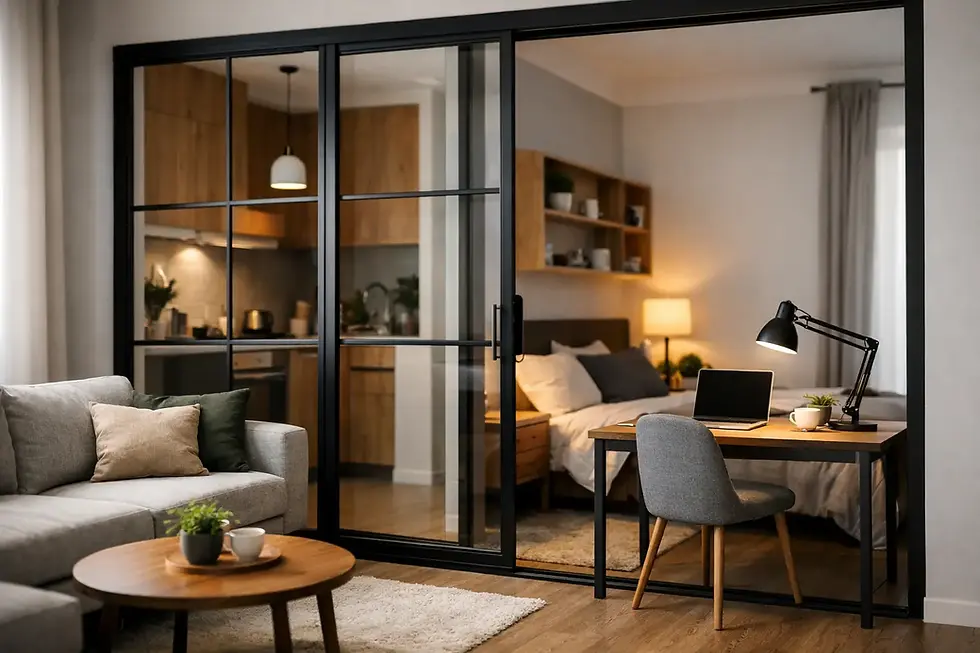
For bathrooms, kitchens, balconies and service yards, aluminium door systems combine resilience with a refined look. Slim-profile sliding, folding and swing doors can introduce light while creating clear separation between spaces. They are especially useful where every centimetre matters: a sliding system avoids the swing clearance required by a conventional hinged door, while a bifold door can open up a compact entrance efficiently.
Aluminium is not automatically maintenance-free. Tracks should be cleared of hair, dust and grit, and moving parts should be checked periodically. Quality rollers, properly aligned panels and suitable seals make a significant difference to how smoothly the system performs over time.
Glass with aluminium framing
Glass is naturally unaffected by moisture and is an excellent companion to aluminium frames. This combination is a popular choice for shower screens, bathroom partitions, kitchen doors and internal dividers because it keeps interiors bright without sacrificing separation.
Clear glass gives a more open visual effect, while fluted, tinted or frosted glass increases privacy and softens the view beyond. For families, safety glass should be specified where appropriate. The main trade-off is upkeep: glass shows water marks and fingerprints more readily than an opaque panel, so it benefits from regular wiping, especially in shower areas.
uPVC: functional and economical
uPVC doors offer good resistance to water and humidity at a generally accessible price point. They are lightweight, easy to clean and commonly considered for utility areas, bathrooms or secondary spaces where a straightforward solution is the priority.
The design limitation is usually aesthetic rather than functional. uPVC may not offer the slim proportions, hardware choices or premium finishes available with aluminium systems. It can be a sensible material for a practical area, but homeowners planning a cohesive, contemporary interior often prefer aluminium for main visible zones.
WPC and composite doors
Wood-plastic composite, often called WPC, is made from a blend of wood fibres and plastic-based binders. It is more water-resistant than conventional timber products and is frequently used for bathroom doors because it will not react to humidity in the same way as untreated wood.
WPC can provide a solid, more traditional door feel and can be finished in colours or wood-inspired surfaces. Still, not all composite doors are made to the same standard. The quality of the core, the edge sealing, the laminate or paint finish, and the door’s internal reinforcement all influence its lifespan. Ask whether the selected door is intended for direct wet exposure or only for general humid conditions.
Treated timber and engineered wood
Timber brings warmth and character that many homeowners value, particularly in bedrooms, studies and living spaces. However, it is not the first choice for a shower-adjacent or frequently wet location unless it has been properly treated, sealed and maintained.
Engineered wood doors, moisture-resistant boards and laminated finishes can perform well in dry-to-moderately-humid internal areas. They should not be mistaken for waterproof materials. Moisture can still enter through cut-outs, hinges, lock openings, unsealed bottom edges and damaged surface finishes. A timber-look door can be beautiful, but it needs the right location and realistic care expectations.
Match the door material to the room
The best material is rarely the same for every doorway. Bathroom entrances benefit from aluminium, glass-and-aluminium systems, WPC or a purpose-built water-resistant door. If the door separates a dry vanity zone from a shower area, ventilation and the direction of water splash should guide the final choice.
For kitchens, aluminium-framed glass sliding or folding doors are effective when you want to contain cooking fumes while retaining sightlines and daylight. They can also suit service yards, where laundry moisture and changing weather conditions make material stability essential.
Wardrobes are a different case. They are usually not exposed to direct water, but built-in units near bathrooms or external walls can face trapped humidity. Aluminium wardrobe sliding systems are a practical option because they resist warping and can be tailored to exact ceiling heights and opening widths. Good track alignment matters as much as the panel material for a smooth daily experience.
For bedrooms and living rooms, material selection can lean more heavily towards acoustics, privacy and visual warmth. A laminated timber door may be entirely suitable here, provided it is kept away from persistent dampness and installed with adequate clearance from wet floors.
Moisture resistance is more than the door panel
A door can be marketed as water-resistant yet still fail early if the surrounding details are overlooked. The frame, hinges, lockset, rollers, bottom guide, silicone joints and threshold all need to suit the room’s moisture level.
In bathrooms, consider whether water can pool at the entrance. A correctly planned floor gradient, appropriate threshold detail and sealed frame junctions help keep water where it belongs. For sliding doors, select a track system that is easy to access for cleaning. For swing doors, choose corrosion-resistant hardware and make sure the bottom clearance does not invite repeated splash exposure.
Ventilation remains part of the equation. Exhaust fans, openable windows and sensible post-shower habits reduce the amount of moisture sitting on surfaces. Material choice protects against the unavoidable humidity; ventilation reduces the stress placed on every finish in the room.
What to ask before ordering a door
Before committing to a design, tell your supplier exactly where the door will be installed and how the space is used. A made-to-measure solution should account for site dimensions, wall condition, flooring level, plumbing constraints and the required opening direction.
Ask whether the quoted material is waterproof, water-resistant or merely moisture-resistant. These terms are not interchangeable. Waterproof systems are designed to prevent water penetration under expected exposure; water-resistant options withstand occasional contact; moisture-resistant products mainly cope better with ambient humidity than standard alternatives.
It is also worth confirming the finish, glass type, hardware specification and installation method. A stylish door only performs as intended when it is measured accurately and fitted with care. Ministry of Door can help homeowners evaluate these details across aluminium door systems, shower screens and customised space-saving solutions.
A well-chosen door should make a wet area easier to live with, not create another maintenance concern. Select a material that suits the exposure, pair it with quality hardware and professional installation, and your space can stay both beautiful and dependable long after the renovation is complete.

Comments