
Can Bifold Doors Save Space in Small Homes?
A door swing can take up more room than homeowners expect. In a compact HDB flat, condominium or smaller landed-home area, the clear space needed to open a conventional door can interfere with kitchen cabinets, bathroom fittings, furniture placement and daily movement. So, can bifold doors save space? In the right opening, absolutely. Their folding action reduces the arc a standard swing door requires, helping you make better use of valuable floor area without settling for a purely functional look.
How bifold doors save space
A conventional hinged door opens as one full panel. Whether it swings into or out of a room, the area within its opening arc must be kept clear. This can leave an awkward empty corner, restrict where you position a dining table, or create clashes with cabinetry and appliances.
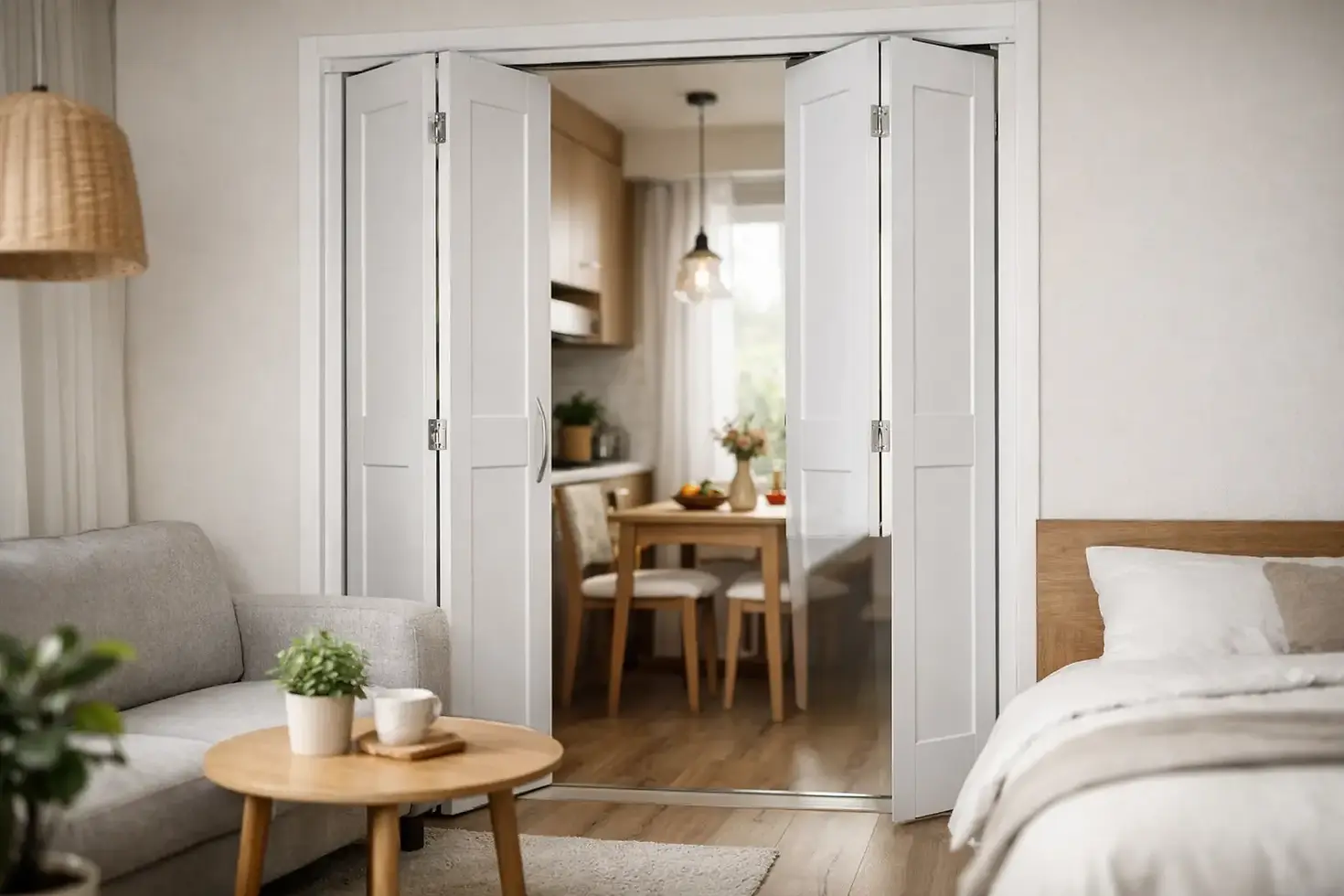
Bifold doors are made of two or more panels connected by hinges. As the door opens, the panels fold together and stack to one or both sides of the opening. Instead of one broad panel sweeping across the floor, the door occupies a much smaller section of the entrance.
The benefit is particularly noticeable at narrow passages and compact rooms. A kitchen entrance, service yard, bathroom, storeroom or wardrobe area often needs access without sacrificing circulation space. Replacing a full swing door with a made-to-measure bifold system can make that area feel more open and easier to use.
This is not simply about squeezing more into a floor plan. Better clearance gives your home a calmer, more considered feel. When doors no longer compete with cabinet doors, laundry racks or furniture, the layout works harder for everyday living.
Can bifold doors save space in an HDB flat?
For many HDB households, bifold doors are a practical choice because rooms and transitional areas are often tightly planned. A standard bedroom or bathroom door may not appear large, but its swing clearance affects the usable space around it. This becomes more obvious after renovation, when new storage, kitchen carpentry or larger appliances enter the picture.
At a bathroom entrance, a bifold door can prevent a door leaf from blocking the corridor or knocking against a vanity cabinet. At a kitchen or service yard, it can create a flexible division between wet and dry zones while leaving room for cooking, washing and storage. For a household with children, elderly family members or a busy daily routine, fewer door clashes can make a genuine difference.
Bifold doors can also work well for wider openings where a single swing door would be heavy or impractical. A folding configuration allows the opening to be covered neatly while giving you the option to open part or all of it as needed. This is useful when you want to close off a kitchen, utility area or study without making the home feel boxed in.
The result depends on accurate site measurement. Walls may not be perfectly square, floor levels can vary, and adjacent cabinetry needs sufficient clearance. A door system should be specified around the actual opening and the way the space will be used, not selected by size alone.
Where the space-saving benefit matters most
Compact kitchens and service yards
Kitchens are one of the strongest cases for bifold doors. Conventional doors can obstruct lower cabinets, fridge access or a narrow walkway. A folding aluminium door lets you separate cooking fumes, heat and moisture from the living area while reducing the footprint of the open door.
For service yards, water-resistant aluminium is especially practical. It is well suited to humid conditions and regular cleaning, and it can be configured with glass or solid panels depending on whether you prioritise light, privacy or visual screening.
Bathrooms and toilets
Bathrooms often have limited clearance around the entrance. A bifold door can provide a tidier solution where a swing door would interfere with a basin, shower screen, toilet or hallway. Aluminium frames are a sensible material choice in moisture-prone areas, provided the system is professionally installed and maintained.
Privacy matters here, so panel selection is just as important as the folding mechanism. Frosted, tinted or textured glass can soften visibility while still allowing light to pass through. Solid or composite-style panels may suit homeowners who prefer a more enclosed look.
Wardrobes and storage areas
A bifold system can improve access to wardrobes, utility cupboards and storerooms, particularly where there is not enough room for wide hinged doors. Because the panels fold back, more of the opening can be accessible than with a conventional door that occupies the front of the cabinet.
That said, wardrobe applications should be planned around the internal layout. If drawers, pull-out baskets or shelving sit close to the opening, ensure the folded panels will not obstruct them. The goal is not just a smaller door swing, but easier access to the storage you use every day.
Room dividers and wider openings
For larger entrances, folding doors offer a useful balance between separation and openness. They can divide a study from a living area, screen a pantry or create a flexible boundary between an indoor space and a covered utility zone. When closed, the panels define the room. When opened, they fold away far more neatly than several individual swing doors.
The trade-offs to consider before choosing bifold doors
Bifold doors save floor space, but they do need a place to stack when open. The folded panels sit at one side of the opening, so they may slightly reduce the clear width at that edge. In a very narrow passage or where full-width, barrier-free access is essential, a sliding door may be the better option.
The number of panels also matters. More panels can make a wider opening easier to manage, but they introduce more hinges and moving parts. A well-made aluminium system with quality hardware will provide a smoother experience, while poor alignment or unsuitable fittings can lead to dragging, rattling or uneven gaps over time.
Acoustic control is another consideration. Folding doors generally provide a visual division and a degree of privacy, but they may not block sound as effectively as a solid, well-sealed swing door. If you are closing off a home office used for calls, a bedroom or a noisy utility area, discuss panel materials, seals and frame details before deciding.
For kitchen entrances, consider whether the door will mainly control cooking fumes or simply define the space. Glass panels can keep the room visually bright, while solid panels may offer a more concealed look. The best design is the one that supports your habits, not just your renovation mood board.
Choosing the right bifold configuration
The right system begins with the opening, then moves to function and appearance. Consider which side the door should fold towards, whether you need one-way or centre-opening panels, and how often the door will be operated. A family kitchen door used several times a day needs reliable hinges and handles that feel comfortable in hand. A storeroom door may prioritise durability and compact stacking instead.
Frame profile and panel finish shape the final look. Slimmer aluminium profiles can give a cleaner, more contemporary appearance, especially with glass inserts. Dark frames create definition in modern interiors, while lighter finishes can help a compact space feel softer and more open. Matching the door to your kitchen cabinetry, shower screen or existing metalwork creates a more deliberate finish.
At Ministry of Door, made-to-measure aluminium door systems allow homeowners to match the configuration to their actual layout rather than forcing a standard-size solution into an imperfect opening. Professional installation is equally valuable, as smooth folding performance depends on precise alignment, secure tracks or frames, and correctly adjusted hardware.
Make the space around the door work better
A bifold door performs best when its surrounding area is planned with the same care. Keep the folding side free of tall furniture, appliance handles and wall-mounted accessories. If the door opens towards a corridor, check that the stacked panels will not create a pinch point. In kitchens, account for cabinet doors and drawers being open at the same time as the bifold door.
Good lighting can also enhance the effect. A glazed bifold door allows light to travel between rooms, helping enclosed kitchens, passageways and service areas feel less confined. Where privacy is required, translucent glass provides a useful middle ground between a solid barrier and a fully open view.
The most successful door choices do more than close an opening. They improve how you move, store, cook and relax at home. If your current swing door keeps claiming floor space you need, a well-planned bifold door could be the small renovation decision that makes the whole room feel more generous.


Comments