

Why Choose a Factory Direct Door Supplier
- findnfound
- 10 hours ago
- 6 min read
A door can look perfect in a showroom and still fail where it matters most - inside your home. In Singapore, where layouts vary, moisture is constant, and every centimetre counts, choosing a factory direct door supplier is often the difference between a product that simply fills an opening and one that genuinely improves the space.
That difference shows up quickly. A sliding kitchen door that glides cleanly without wasting room. A shower screen that fits the bathroom properly instead of fighting the walls. A wardrobe door that feels light, neat, and tailored rather than bulky and off-the-shelf. When doors are made with the actual site, usage, and finish in mind, the result is not just more practical. It looks more considered too.
What a factory direct door supplier really offers
A factory direct door supplier sits closer to the making of the product, not just the selling of it. That matters because doors are rarely one-size-fits-all, especially in HDB flats, condominiums, landed homes, and commercial interiors where dimensions, conditions, and design expectations differ from project to project.
Instead of pushing standard stock and hoping it fits, a factory-direct model usually allows more control over measurements, frame profiles, panel choices, finishes, and configuration. For homeowners, that means fewer compromises. For renovators and contractors, it often means a clearer process and better coordination between what is ordered and what is eventually installed.
Price is part of the appeal, but it should not be the only reason to choose this route. Direct-from-factory pricing is valuable because it can reduce unnecessary mark-ups. The stronger reason is that customisation and installation planning become part of the purchase, rather than an afterthought.
Why it matters in Singapore homes
A door in Singapore does more than separate rooms. It has to work with compact layouts, humid conditions, active family use, and increasingly design-led interiors. That makes material choice and fabrication quality especially important.
Aluminium door systems have become a smart option for this reason. They are durable, resistant to moisture, easier to maintain, and visually lighter than many traditional alternatives. Slim profile frames can open up a kitchen, make a bathroom feel less boxed in, or help a wardrobe blend into the room instead of dominating it.
Still, not every aluminium system performs the same way. Profile thickness, track quality, finishing, hardware, and installation accuracy all affect the final result. A beautiful door that rattles, drags, or misaligns after a short period is not good value. This is where an experienced factory direct door supplier stands out - by matching the right system to the real use case, not just the catalogue image.
The value goes beyond price
People often assume factory direct simply means cheaper. Sometimes it does. But the better way to think about it is value per fit, value per use, and value over time.
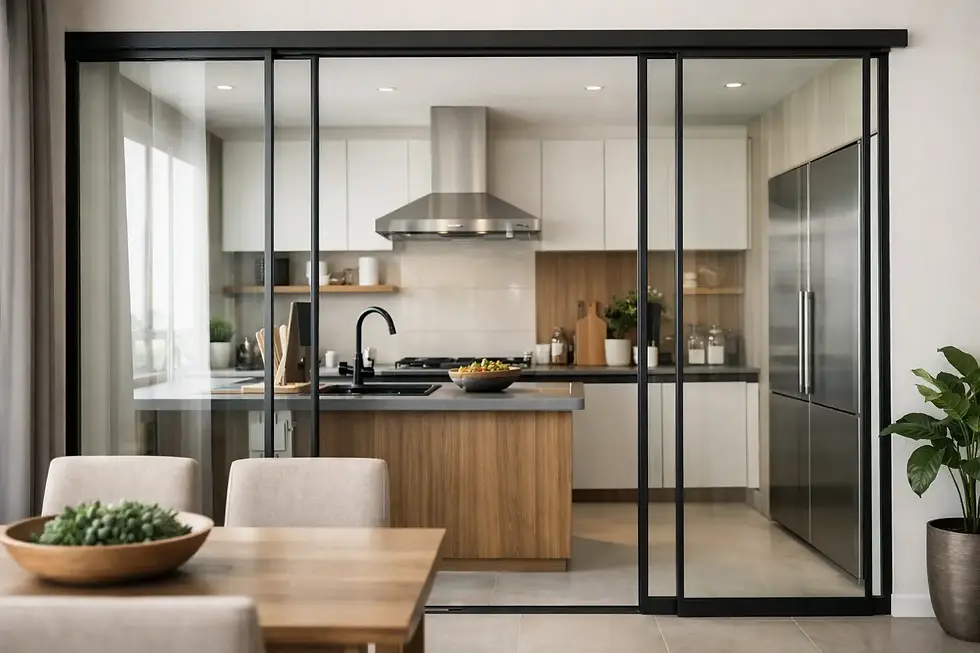
A made-to-measure bifold or sliding door can save space in a compact kitchen where a swing door would be awkward. A properly fabricated shower screen can reduce water spread and make daily cleaning easier. A custom wardrobe sliding door can improve access while keeping the room visually tidy. These gains are practical, but they also affect how the home feels to live in.
There is also less risk of hidden costs when the supplier understands measurement, fabrication, and installation as one connected job. If a seller only handles the sales side, problems can surface later - frame mismatch, site adjustment delays, or finish inconsistencies. Those issues cost time, money, and patience.
How a factory direct door supplier supports better design
The best door choices are rarely just functional. They shape the mood of a room.
In modern homes, doors are part of the visual language. A slim black aluminium frame can sharpen a contemporary interior. A clean glass panel can brighten a service yard or kitchen. A soft-toned finish can help wardrobes and partitions sit quietly within the space. Good door design should support the interior, not interrupt it.
This is why customisation matters so much. The right supplier should be able to advise on panel types, framing style, opening direction, and proportions based on the room itself. A family with young children may prioritise safety and smooth operation. A homeowner upgrading a resale flat may care more about replacing bulky, dated doors with cleaner and more space-efficient options. A commercial buyer may need durability and consistency across multiple units.
Different priorities, different solutions.
What to look for when comparing suppliers
Not every supplier who uses the word direct offers the same level of control or service. Some simply import standard products in volume. Others provide actual fabrication flexibility, proper consultation, and installation support.
The first thing to look at is whether the supplier understands site realities. In older flats and renovated homes, walls and openings are not always perfectly even. A supplier who works closely with measurement and fabrication is better placed to anticipate this.
The second is product range. That does not mean an endless list for the sake of it. It means having the right systems for different needs - sliding doors for tighter layouts, bifold options for utility areas, swing doors where clearance allows, shower screens for wet zones, and wardrobe systems that maximise bedroom storage without adding visual weight.
The third is finish and detailing. A premium look depends on more than the broad style. The neatness of the frame joints, the quality of the track, the consistency of the powder-coated finish, and the feel of the hardware all contribute to the final impression.
Finally, ask how installation is handled. Even the best-made door can underperform if it is installed poorly. A dependable supplier should treat installation as part of the solution, not a separate problem for the customer to solve.
Factory direct door supplier options for different spaces
The right door system depends on where it is going and how the space is used.
For kitchens, sliding and slim profile systems are popular because they preserve movement while keeping cooking zones visually connected. They are especially useful in flats where every bit of circulation space matters. For bathrooms, aluminium-framed shower screens and water-resistant partitions are practical because they handle humidity well and are easier to maintain.
For wardrobes, sliding systems often make the most sense in tighter bedrooms, while the frame design can be selected to match a more minimal or more decorative interior. In service yards or utility areas, folding and bifold configurations can help with ventilation, access, and compact use of space. For entrance or room-to-room applications, the decision may come down to privacy, sound control, style, and available clearance.
This is where a solution-oriented supplier becomes valuable. The product should suit the room, the household, and the renovation goal - not just the measurement.
Why homeowners and renovators prefer end-to-end support
A renovation has enough moving parts already. When the door supplier can advise, measure, fabricate, and install, the process becomes easier to manage and the outcome tends to be more consistent.
That does not mean every project is identical. Some customers know exactly what they want and need execution. Others need more guidance on style, layout, or material choice. A good supplier should be able to support both. Confidence matters, but so does listening.
This is where Ministry of Door has strong appeal for Singapore homeowners who want both style and practicality. The combination of custom aluminium systems, direct pricing, and installation support suits real renovation decisions - from opening up a kitchen to upgrading a bathroom or refining bedroom storage.
The smartest choice is the one that fits your home properly
There are times when a ready-made door is enough. If the opening is standard, the usage is light, and design is not a major concern, a simpler option may do the job. But for many homes in Singapore, that is not the reality.
When space is tight, when moisture is a factor, when appearance matters, or when dimensions are unusual, a factory direct door supplier gives you more control over the result. You get a door that is built for the space, not forced into it.
And that is usually what people want in the end - not just a door, but a better way to use the room around it. Choose the supplier who can see the full picture, and the finished space will feel more polished from the first glance to the thousandth use.


Comments