
Space Saving Wardrobe Systems That Work
A wardrobe should not make a bedroom feel smaller. Yet in many Singapore homes, that is exactly what happens. Hinged doors need clearance, bulky carcasses eat into floor area, and awkward corners become dead space. That is why space saving wardrobe systems matter - not as a trend, but as a practical upgrade for flats, condominiums and landed homes where every centimetre counts.
The best systems do more than store clothes. They improve movement around the room, make daily use easier, and create a cleaner visual line across the wall. When chosen well, they also support the look of the home rather than fighting it.
What makes space saving wardrobe systems effective
A space-saving wardrobe is not simply a smaller wardrobe. It is a system designed to reduce wasted clearance, improve internal organisation and fit the room properly. That usually means thinking about door type, profile thickness, internal layout and material performance together.
Sliding wardrobe doors are often the first solution people consider, and for good reason. Because the panels move sideways rather than swinging outward, they free up valuable circulation space in front of the wardrobe. In compact bedrooms, that can be the difference between squeezing past the bed and moving comfortably.
But the doors are only one part of the equation. Internal fittings matter just as much. A wardrobe with poorly planned shelves and hanging sections can still feel cramped, even if the exterior is slim and modern. Effective systems are designed around the way the household actually lives - long dresses, office wear, folded pieces, children’s items, bags, bedding or a mix of everything.
Why sliding systems suit modern bedrooms
For many homeowners, sliding systems are the most practical answer to limited bedroom space. They offer a cleaner front elevation, work well in narrow layouts and pair easily with contemporary interior styles. In a room where the bed already sits close to the wardrobe, hinged doors often feel like a design mistake. Sliding panels remove that conflict.
They also help visually calm the room. Large, uninterrupted door panels can make a wall feel more ordered, especially when matched to neutral finishes, mirror panels or slim aluminium framing. In smaller homes, that visual neatness makes a real difference. A bedroom does not need more features. It needs fewer disruptions.
There is a trade-off, of course. With standard sliding wardrobes, only one side opens at a time. For some households, that is perfectly fine. For others, especially couples sharing storage, the internal planning has to be smarter so both users can access their sections without frustration. Good design solves that before fabrication starts.
Space saving wardrobe systems for different room types
Not every bedroom has the same constraints, so the right wardrobe system depends on the layout.
HDB bedrooms
In many HDB flats, bedrooms need to handle storage without overwhelming the room. A full-height sliding wardrobe usually works best because it uses vertical space efficiently and keeps the footprint disciplined. Loft storage above the main hanging area can help with less frequently used items such as luggage, spare linens or festive wear.
Slim profiles are especially useful here. A heavy frame can make the wardrobe look imposing, while a neater profile keeps the overall appearance lighter and more refined.
Condominium interiors
Condo owners often want functionality without sacrificing the design language of the home. This is where custom finishes, mirrored panels and coordinated aluminium detailing can make the wardrobe feel integrated rather than added on. Space saving wardrobe systems in these settings should solve storage pressure while still supporting a polished, premium finish.
Landed homes and larger bedrooms
With more room, the goal may shift from fitting the wardrobe in to making it work harder. Larger spaces can support broader combinations of hanging sections, drawers, display niches or his-and-hers layouts. Even then, a space-saving approach still matters. Better planning creates a tidier frontage, easier access and a more intentional room layout.
The role of aluminium in wardrobe design
Material choice is often overlooked, but it affects both performance and appearance. Aluminium-framed wardrobe systems are especially well suited to humid conditions. In Singapore’s climate, moisture resistance matters. Materials that swell, warp or deteriorate over time can turn a stylish wardrobe into an expensive maintenance issue.
Aluminium offers a more dependable structure while still allowing for a sleek, contemporary finish. It suits homeowners who want a wardrobe that looks sharp, handles daily use well and supports long-term durability. It also works beautifully with glass, mirror and panel combinations, giving more flexibility in the final design.
This is one reason design-conscious renovators increasingly look beyond purely conventional carpentry. A wardrobe should not just fill a wall. It should stand up to the environment and maintain its finish over time.
Internal planning is where the real space-saving happens
A beautiful exterior gets attention, but the inside determines whether the wardrobe is genuinely useful. The most effective layouts are based on clothing habits, not guesswork.
If most of the household’s clothes are folded, excessive hanging space wastes volume. If long garments dominate, shallow compartments and too many shelves become irritating quickly. Drawers are useful, but not everywhere. Some people benefit more from open shelving, while others need concealed sections to keep visual clutter under control.
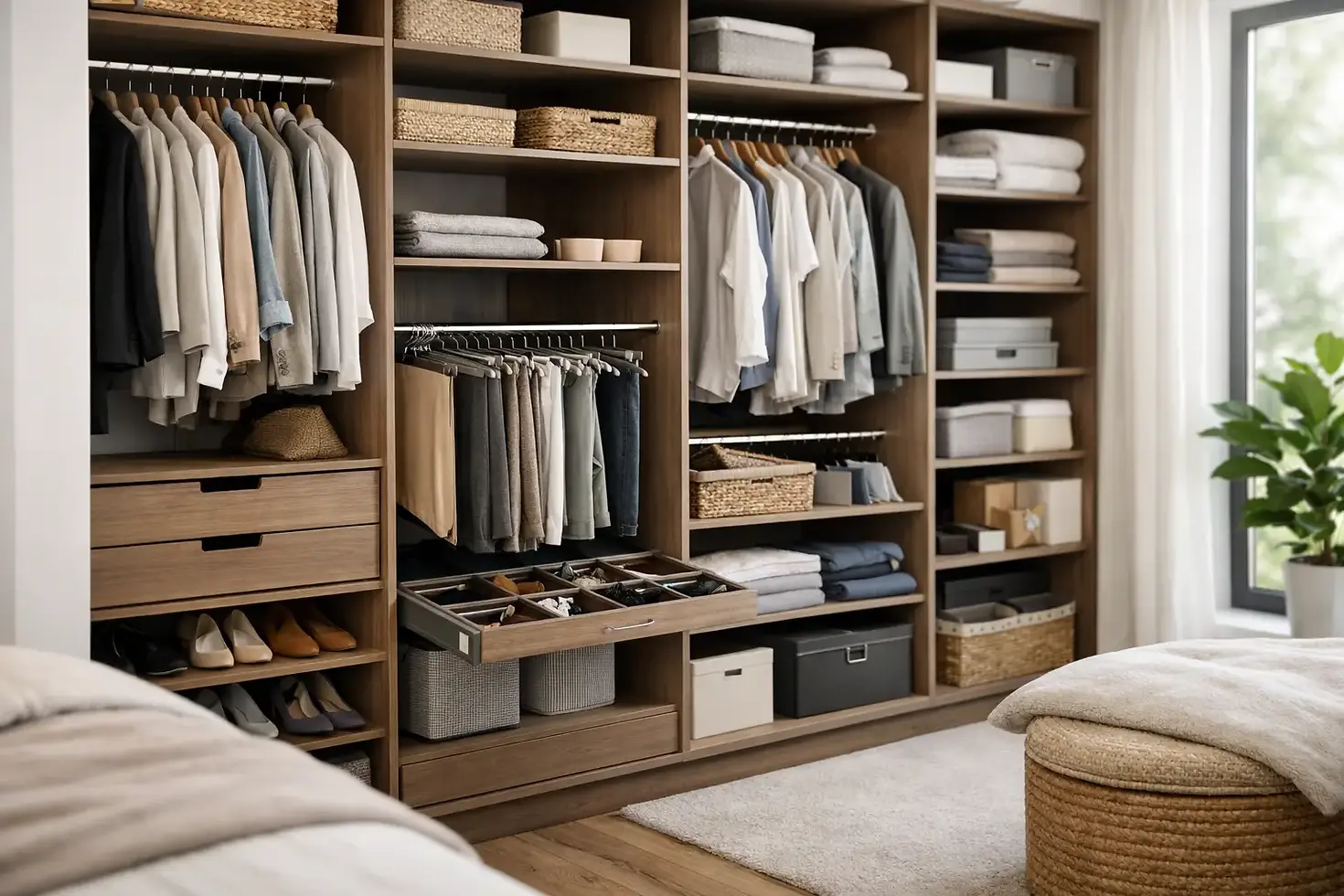
Height also matters. Double hanging sections can dramatically increase capacity for shirts, blouses and children’s wear. Pull-out accessories, integrated drawers and upper compartments help separate everyday items from occasional-use storage. These details may seem small on paper, but together they determine whether the wardrobe feels effortless or awkward.
When made-to-measure is worth it
Off-the-shelf wardrobes can be tempting because they appear faster and cheaper. Sometimes they are good enough for a spare room or a temporary setup. But for primary bedrooms and renovation projects, standard sizes often leave gaps, waste corners and compromise the room’s proportions.
Made-to-measure wardrobe systems use the full available width and height. That means fewer dead zones, better alignment with the room and a more finished result. It also allows the internal configuration to match the user rather than forcing the user to adapt.
For awkward recesses, beam drops or rooms with unusual dimensions, customisation is not a luxury. It is the reason the wardrobe works at all. A well-fitted system can make a compact room feel considered and spacious, even when the actual square footage stays the same.
Style still matters
Practical storage should not come at the expense of aesthetics. A wardrobe takes up significant visual space, so its finish influences the entire mood of the bedroom.
Light-toned panels can make a room feel more open. Mirror elements help bounce light, though too much reflection may not suit every design scheme. Darker finishes can look sophisticated, but in smaller bedrooms they need careful balancing with wall colour, flooring and lighting. Slim framed sliding doors often strike the right balance - contemporary, elegant and efficient.
Homeowners increasingly want storage that feels designed, not merely installed. That is where craftsmanship and detailing become important. The finish, the panel alignment, the smoothness of the track and the quality of the installation all shape the final impression.
Choosing a system that lasts
The smartest purchase is not always the cheapest quotation. Wardrobes are used daily, often for years, so track quality, hardware reliability and installation standards matter. A misaligned sliding panel or rough-running door becomes annoying very quickly.
It is worth asking how the system is fabricated, what materials are being used and whether the layout has been planned around your room and habits. A good supplier will not just offer a catalogue. They will guide the decision, advise on realistic options and ensure the final installation fits properly.
That is where an experienced renovation partner adds value. Ministry of Door, for example, approaches wardrobe solutions the same way it approaches other home systems - with a focus on tailored design, dependable materials and practical installation support that helps homeowners transform space with confidence.
The right wardrobe should feel calm, useful and easy to live with every day. If your current setup blocks movement, wastes corners or never quite holds what it should, that is usually a sign the room does not need more storage. It needs a better system.


Comments