
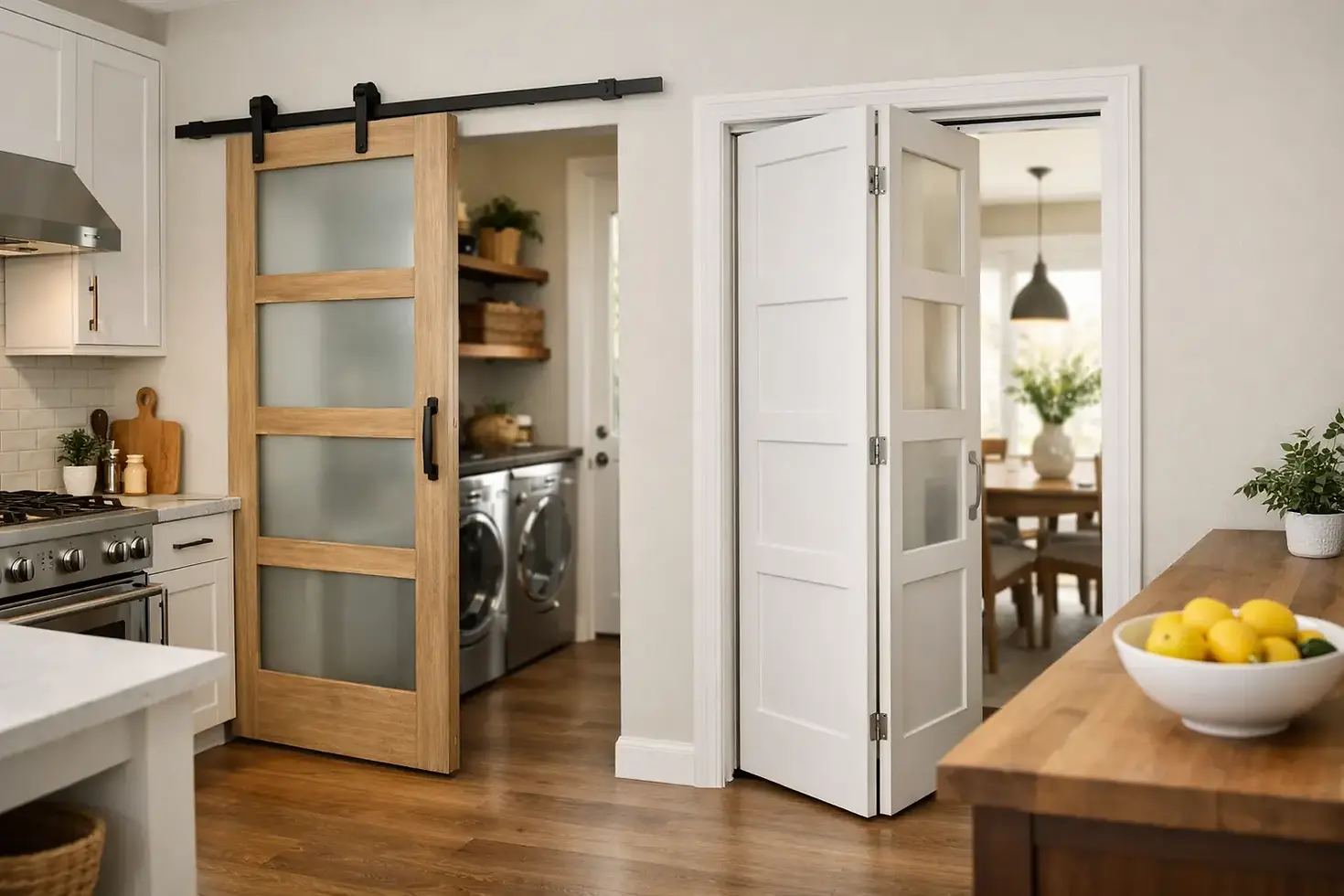
Best Space Efficient Kitchen Entry Doors
A kitchen entrance can quietly waste more room than most homeowners realise. In many Singapore homes, the wrong door swing clips a cabinet corner, narrows the walkway, or makes the whole kitchen feel tighter than it needs to. That is why space efficient kitchen entry doors matter - not just for saving floor area, but for making everyday movement smoother, safer and far more pleasant.
In compact HDB flats and condominiums, every centimetre counts. The kitchen is often one of the hardest-working areas in the home, with constant traffic, humidity, cooking odours and limited clearance around cabinetry or appliances. Choosing the right entry door is less about picking a nice panel and more about matching the door system to the way your space actually functions.
Why space efficient kitchen entry doors matter
A kitchen door is doing several jobs at once. It controls access, frames the look of the entrance, helps manage smells and grease, and influences how open or enclosed the kitchen feels. If it takes up too much swing space, the problem shows up immediately. You lose usable wall area, circulation becomes awkward, and even a well-planned kitchen starts to feel compromised.
Space efficient kitchen entry doors solve this by reducing the footprint of the opening movement. Instead of needing a full arc to open, they slide, fold, or stack in a way that keeps surrounding zones more usable. That means more freedom for cabinets, counters, trolleys and day-to-day movement.
The best option, though, depends on your layout. A narrow galley kitchen has different needs from an open-plan condominium kitchen. A family that cooks heavily may prioritise enclosure and easier cleaning, while another homeowner may want the kitchen to feel visually connected to the dining area.
The most practical types of space efficient kitchen entry doors
Sliding doors
Sliding doors are one of the strongest choices when there is little room for a door swing. Because the panels move sideways, they do not interfere with nearby cabinets, islands or walkways. This makes them especially effective for compact entrances or kitchens that open into a dining space.
From a design point of view, slim profile aluminium sliding doors create a cleaner and more contemporary look than many homeowners expect. They can make the entrance feel lighter and more refined rather than purely functional. Glass inserts also help preserve brightness, which matters in kitchens where natural light is limited.
The trade-off is that a standard sliding system never gives you a fully clear opening because one panel usually overlaps another. If you want the widest possible access for moving bulky items in and out, this is worth considering.
Bifold doors
Bifold doors are a familiar and practical solution in many local homes because they fold into a compact stack. They are useful when you want more opening width than a sliding door can provide, but still need to avoid a full swing radius.
For kitchen entrances, bifold doors strike a good balance between enclosure and flexibility. You can close them to contain cooking activity, then fold them back when you want the kitchen to feel more open. In tighter homes, that adaptability is often more valuable than people expect.
That said, bifold doors do introduce more moving parts than a simple swing door. Good fabrication and proper installation matter. If the alignment is poor, the operation can feel less smooth over time.
Folding doors
Folding doors are often chosen for highly compact spaces where conventional options simply take up too much room. They are practical, efficient and familiar, especially for utility-style kitchen entrances.
Their strength is obvious - they save space and allow easy access without demanding much clearance. The question is whether they suit the visual standard you want for the rest of the home. Some homeowners prefer a more premium look, especially in newly renovated kitchens where the entrance is part of the overall interior concept. In that case, aluminium-framed systems with a more polished finish can offer a better result.
Swing doors
A swing door can still be the right answer, but only when the layout allows for it. If the kitchen entrance has generous clearance and you want a simple, clean operation, a well-designed swing door remains a solid option.
For space-saving purposes, however, it is usually the least efficient of the main door types. The arc of the door claims floor space every time it opens. In a roomy landed property, that may be fine. In a compact flat, it often creates avoidable friction.
What to consider before choosing a kitchen door
The first issue is opening clearance. Look at what sits near the entrance - lower cabinets, tall units, a fridge, a dining table, or a narrow corridor. The right door should work with those elements, not force compromises around them.
Next is ventilation and light. Some homeowners want a fully enclosed kitchen to contain smells and splatter, while others want visual openness so the home feels larger. Glass-panel aluminium doors are often a strong middle ground because they retain separation without making the kitchen feel boxed in.
Material also matters more in a kitchen than in many other parts of the home. Heat, moisture and regular cleaning are part of daily use. Aluminium performs well here because it is durable, resistant to humidity and easier to maintain than materials that may warp or deteriorate in damp conditions.
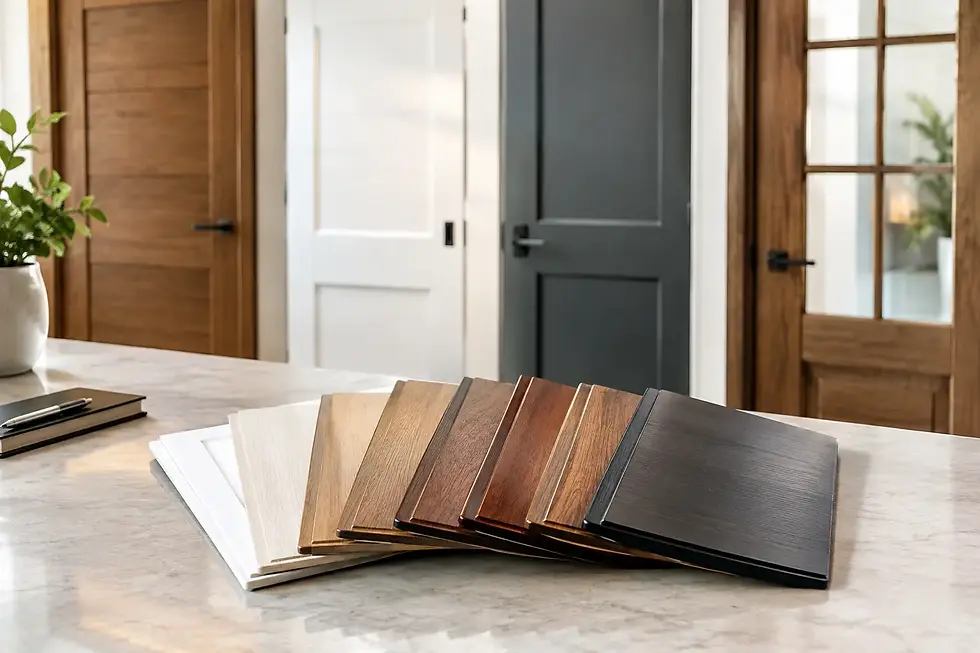
Then there is aesthetics. A kitchen door should not look like an afterthought. It sits at a transition point between spaces, so its frame, finish and profile affect the overall impression of the home. A slimmer frame can feel more modern and less bulky, while customised sizing helps the entrance look intentional rather than forced into a standard opening.
Matching the door to different home types
HDB flats
In many HDB layouts, the kitchen entrance is tight and highly visible from the living or dining area. Sliding or bifold doors are often the most practical choices because they preserve circulation and help the home feel less cramped. If the goal is to keep cooking contained without darkening the kitchen, aluminium-framed glass doors are especially effective.
Condominiums
Condo owners often want a more design-led finish. Open-plan layouts can benefit from slim sliding systems that look elegant while still giving the option to close off the kitchen when needed. Here, the visual quality of the frame and the precision of the installation matter just as much as the space-saving function.
Landed homes
Landed properties may have more flexibility, but that does not mean space efficiency is irrelevant. Kitchens in larger homes still benefit from cleaner traffic flow, particularly when there is heavy family use or direct access to service areas. Wider customised systems can create a polished result without wasting space.
Why customisation makes a visible difference
Not every kitchen entrance is square, standard or renovation-ready. Some openings are narrow, some have uneven side conditions, and some need to coordinate with existing cabinetry or wall finishes. That is where made-to-measure fabrication changes the outcome.
A customised kitchen door fits properly, operates more smoothly and looks better integrated with the rest of the renovation. You are not just buying a door type. You are solving a layout problem with the right dimensions, frame style, panel configuration and finish.
This is also where professional guidance helps. A door that looks ideal in a showroom or catalogue may not be the best fit once site conditions are measured. For homeowners who want a stylish result without practical regrets, consultation and installation support are part of the value, not an extra.
Choosing for daily life, not just the renovation photo
The most successful kitchen doors are the ones that still feel right six months after installation. They open easily when your hands are full. They do not clash with nearby furniture. They are simple to clean, reliable in humid conditions and attractive enough to lift the whole entrance.
That is the real standard for space efficient kitchen entry doors. They should save room, yes, but they should also improve how the kitchen works and how the home feels. A well-chosen aluminium system can do both - giving you a smarter footprint, a cleaner finish and a kitchen entrance that looks intentional from day one.
If you are planning a renovation or replacing an outdated kitchen door, start with the movement of the space rather than the panel style alone. The right choice is the one that respects your layout, suits your cooking habits and adds visual value every single day. Beautiful door, beautiful mood is not just a slogan when the entrance genuinely transforms the way your home works.


Comments